Billing and contracts
Bill what was delivered
Contracts and invoices from the same record the assets and markets read.
Delivered energy412 kWh
Flex reward−€6.20
Grid fees€31.40
Invoice total€84.10
Business operations
Contracts, billing, subsidies and reporting run on the same live data the trading desk trades on. Finance closes on the numbers that were traded, not a reconstruction of them.
What business operations does
Billing and contracts
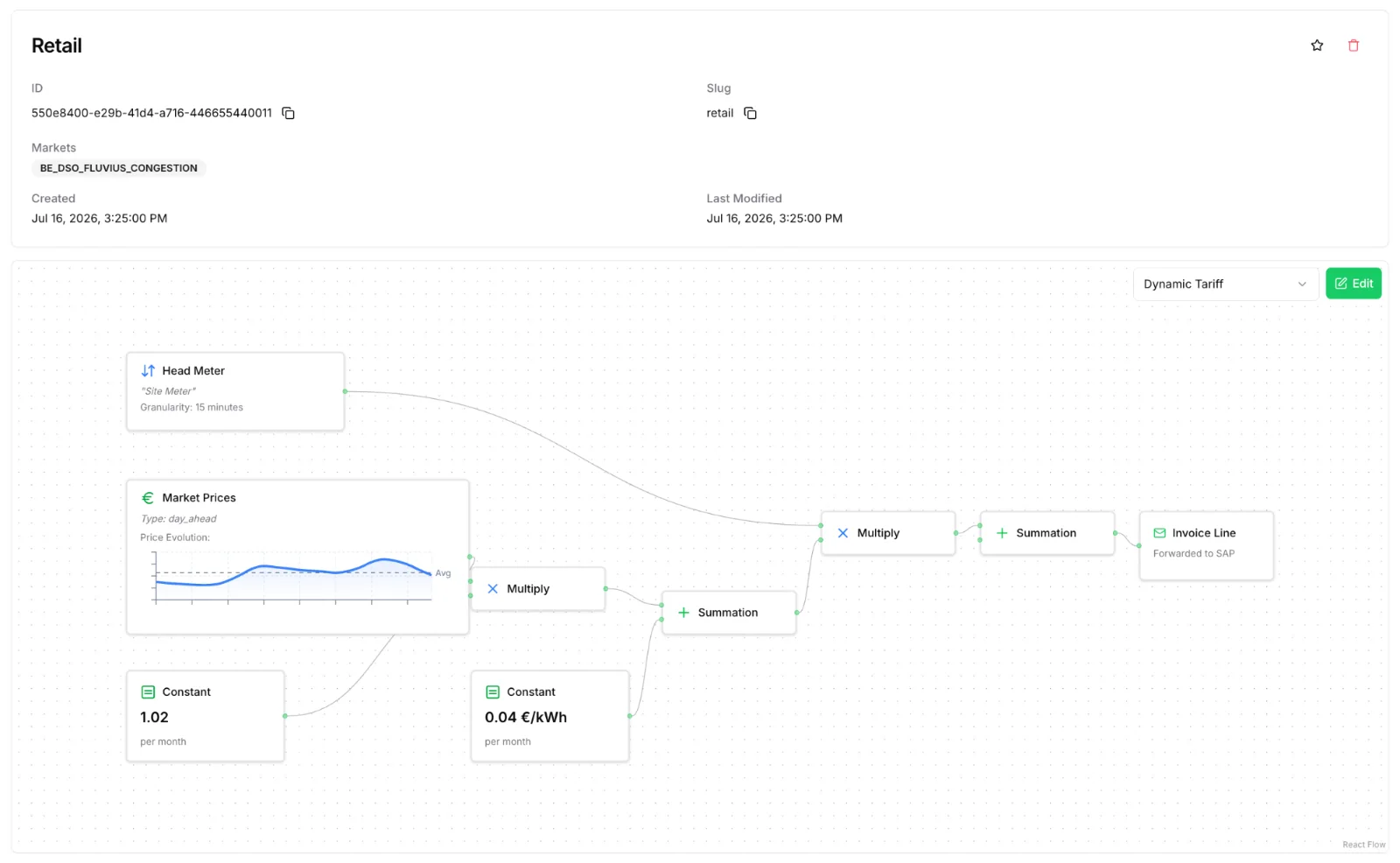
Contracts and invoices from the same record the assets and markets read.
Subsidies
Subsidy schemes and curtailment compensation tracked per asset.
Energy products
Build the tariffs and products you sell, and change them without a release.
Compliance
Registrations and reporting kept in order, with an audit trail behind every position.
Financial reporting
Revenue, cost and margin by asset, portfolio or market, on desk data.
CRM
Customer, site and contract held once, so support and billing give the same answer, and our L2 support resolves device faults before they become tickets.
Contract monitoring
Every contract watched against what the assets actually delivered.
Communications
Messages about dispatch, outages and settlement, sent from the system that holds the data.
Settlement
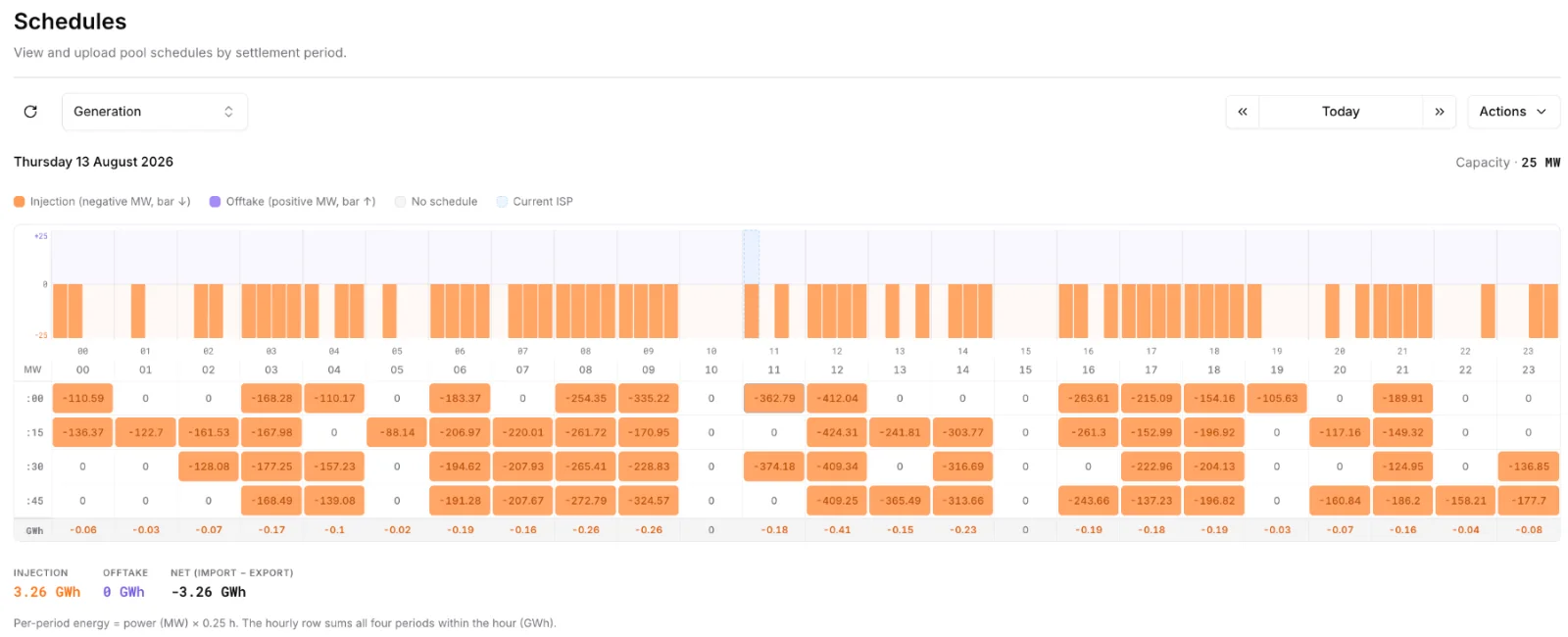
Schedules, injection and offtake per settlement period feed billing directly. No reconciliation week.
FAQ
Still have a question? A 20 minute intro is the quickest way to an answer.
A subscription, not a share of your upside. No profit share, no revenue share and no black box: DSG keeps its data and its trading and pays no share of what the portfolio earns.
Yes, and most customers do. People usually start where the pain is, connectivity or trading, and add settlement, billing and reporting once the first module is running.
GDPR applies by default and each customer’s asset data is separated per tenant, so no operator can see another’s portfolio, positions or settlement. We hold a certified information security management system and share the standard, scope and certifier on request.
Every party is settled from the same delivered volume, not from separate spreadsheets. The value an asset earned is attributed once, then split according to the contract between owner, tenant and supplier.
Yes. Revenue, cost and margin are attributed per asset and per market, on the same live data the trading desk runs on.
It is turning a business customer’s ability to shift load, charge a battery later or run a chiller earlier into money, by selling that flexibility into the markets that pay for it. The mechanics matter more than the term: the asset is metered, the activation is evidenced, the value is settled, and the customer gets a share they can verify.
Through products, not discounts. Cashbacks, time specific contracts and grid support agreements pay the customer out of value that was actually earned, so the reward scales with the revenue instead of eating the margin.