Connectivity
Connect every asset, cloud to cloud
Solar, batteries, EVs and heat pumps across 22+ brands, through a vendor cloud or a smart gateway. No new hardware.







Home battery connected from consent link
Asset operations
Connect every asset cloud to cloud or through a gateway, see what each one is doing right now, and let agents keep them healthy. No new hardware.
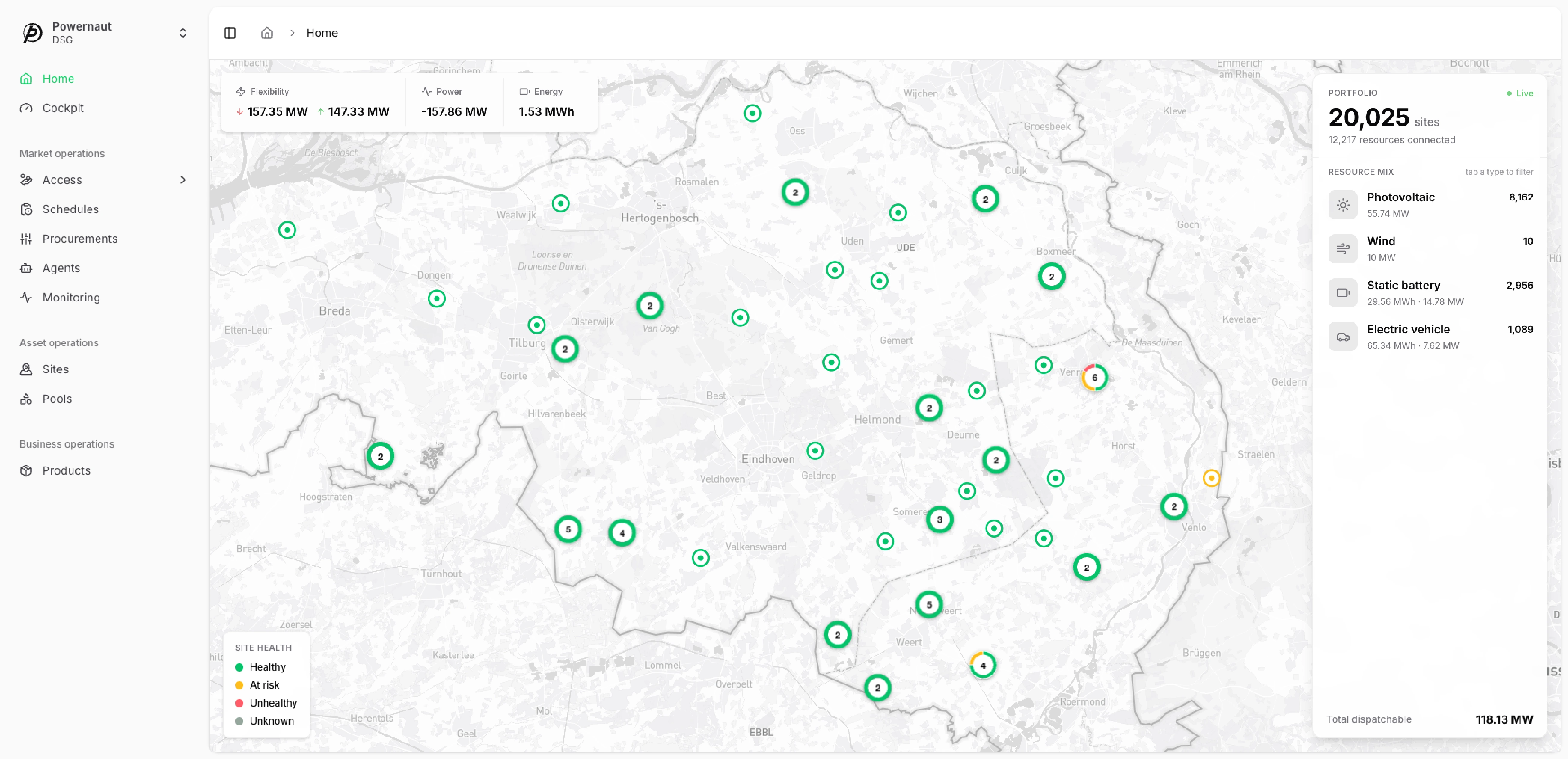
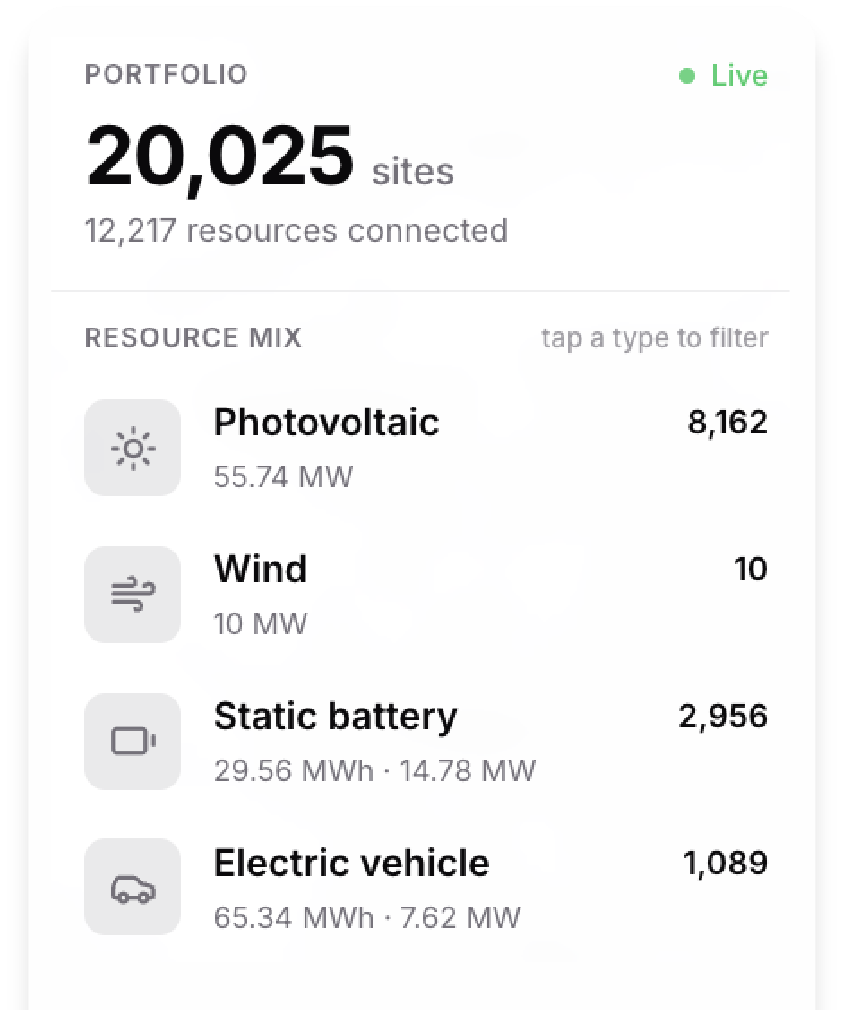
What asset operations does
Connectivity
Solar, batteries, EVs and heat pumps across 22+ brands, through a vendor cloud or a smart gateway. No new hardware.
Forecasting
Production and consumption per asset, at the quarter hour the market settles on.
Local control
Setpoints reach the asset directly, with safety and grid limits respected every time.
Setpoint sent, within grid limit
Outage planning
Plan downtime once. The trading desk sees it before it nominates.
Site status
Live status for every asset. Agents handle the routine fixes, your team approves what matters.
Topology
Sites, meters and connection points modelled once, so volumes reconcile against the right point.
Asset performance
Health per asset, so the trading desk nominates against what each one actually delivers.
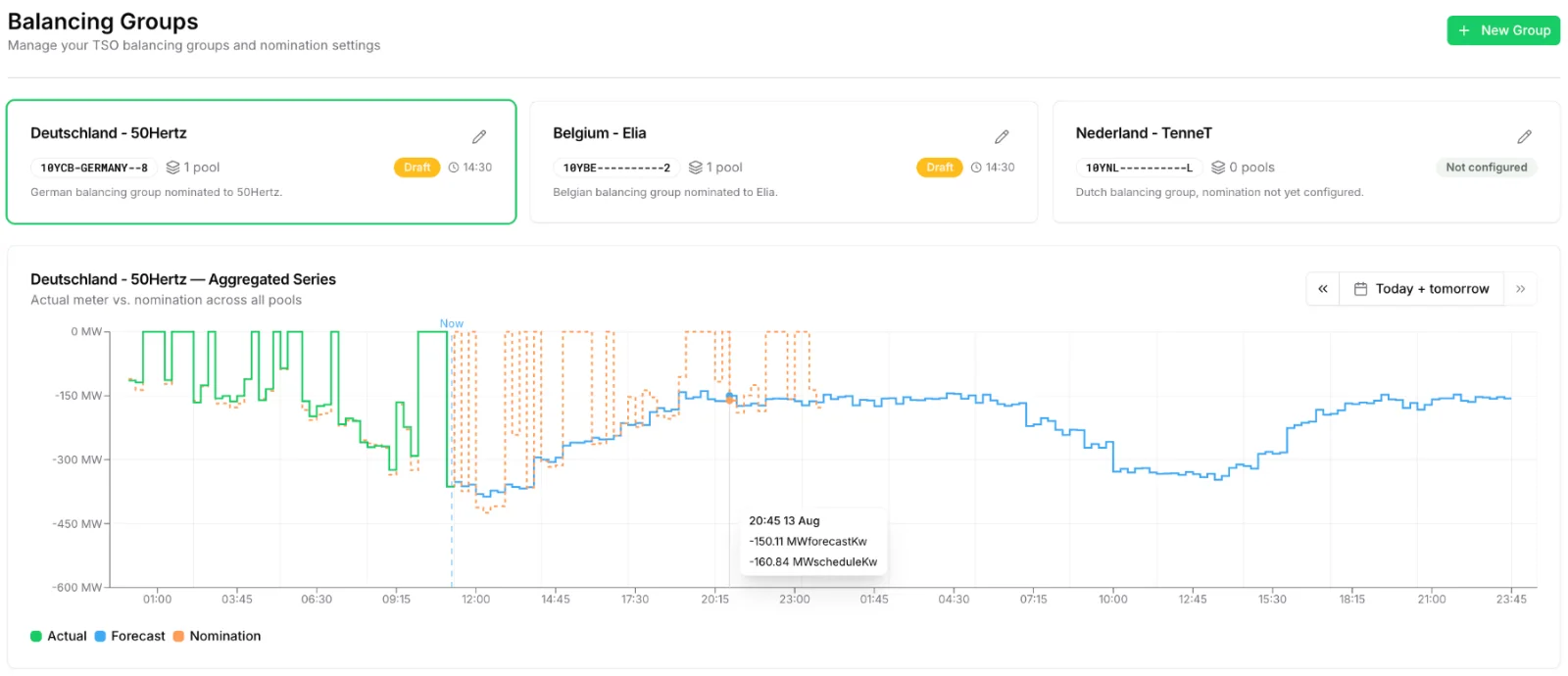
Forecasting
Production and consumption per asset, rolled up to the portfolio. Actual against forecast and nomination, per balancing group, per quarter hour.
Agents (Troopers)
Each agent watches one job across the portfolio.

Checks how each site behaves and picks up issues.

Reports on the portfolio every day.
New agents are joining the crew.
FAQ
Still have a question? A 20 minute intro is the quickest way to an answer.
Solar, storage, EV and HVAC brands are supported natively, including Huawei, SolarEdge, SMA, Fronius, Sungrow, Solis, Solax, Growatt, GoodWe, Enphase and Loxone on the generation and storage side, and Mercedes-Benz, Tesla, Volvo and Volkswagen for vehicles. Heat pumps and air conditioning are supported as flexibility assets in their own right, not just as monitored load.
Cloud-to-cloud is the fastest route and needs no hardware. It suits portfolios where the manufacturer already exposes a cloud API and site connectivity is reliable.
Yes. The workspace sits alongside your enterprise systems and leaves them in place.
Usually weeks. Connecting the assets is the quick part. Market registrations take longest, and we work through them with you.
The asset falls back to a safe local mode and continues on its last valid schedule, with no stop and no drift. Dispatch resumes automatically when the link returns.
Assets are pooled and can be split into sub-pools, for example battery, PV and EV, each with its own rules and market targets. Within a pool, merit order ranks assets by cost, availability and constraint, then activates them in that order until the requested volume is met.
They run on one optimisation, not two competing ones. Behind the meter objectives, self-consumption, peak shaving and grid fee reduction, are valued against what the market would pay for the same kilowatt hour, and the higher value wins inside the limits set per asset.
Yes, you can use your own. Your models run on the platform over API, alongside ours or instead of them. Our forecasts refresh continuously and feed nominations directly. Romande Energie used them to cut imbalance costs by 70 percent on its B2B portfolio.